
Why Remote and Hybrid Teams Feel the Communication Gap Faster
Written by Dr. Janine Stichter | Behavioral Psychologist, Director of User Experience, Klearcomm.ai
When a message starts to go sideways in person, you usually catch it in real time. A furrowed brow. A pause that runs a beat too long. Someone’s posture shifting. You feel it, and you adjust before the misread sets.
Remote and hybrid work take most of that away. What’s left is the words on the screen. And the brain doesn’t handle a signal that thin gracefully.
THE BRAIN FILLS THE GAP NO MATTER WHAT
Here’s the mechanic underneath it. When a message lands in ambiguous territory, the brain doesn’t stop and wait for more information. It fills the blank on its own, using mood, past experience, and whatever pattern it’s already primed to see. That’s not a flaw. It’s how we’re built.
In a room, tone and timing and body language quietly hand the brain enough context to fill that blank correctly. Strip those away and the blank is still there, but now the brain fills it with a guess. Sometimes the guess is fine. Often it isn’t.
Think about a message that just says “Can we talk?” In person, you’d read the face that came with it and know in a second whether it’s good news or bad. On a screen, there’s nothing to read. So the receiver picks a story, and it’s almost never the calm one.
LESS SIGNAL, MORE STORY
The less signal a message carries, the more the receiver has to supply themselves. And people tend to supply the interpretation that matches their own wiring, not the sender’s intent.
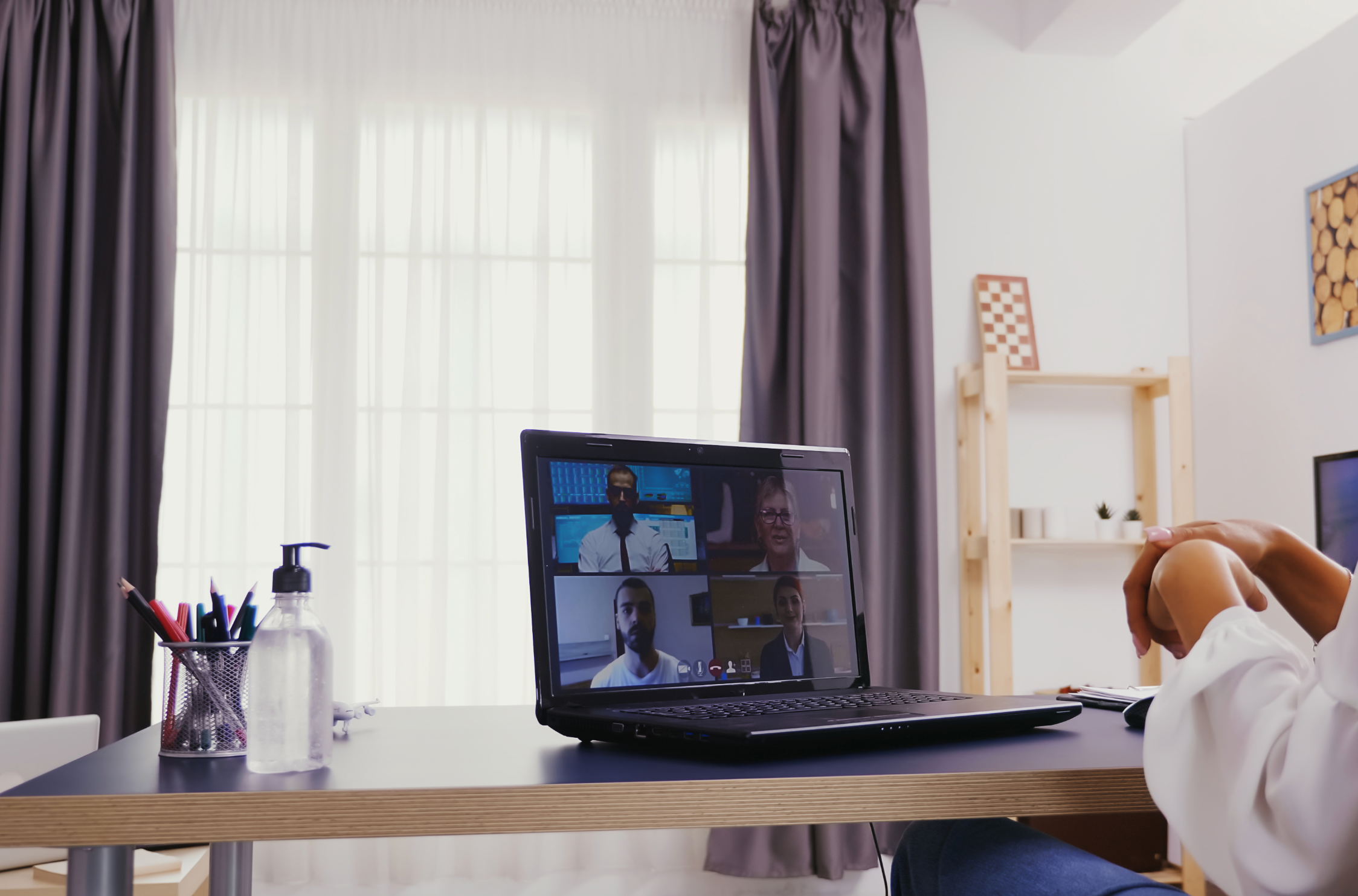
A one-word reply lands hard here. “Fine.” In person, the smile or the shrug tells you which “fine” it is. On a screen, it reads as a verdict. Cameras off on a video call does the same thing at scale. The words are still moving, but the calibration cues that used to keep them on track are gone.
Hybrid adds its own twist. When three people are in a room and two are on a screen, the in-room group shares glances, side comments, and an energy the remote people can’t see. The remote folks aren’t just missing cues from the speaker. They’re missing a whole layer of the conversation, and they fill that blank too. Usually with “they’re deciding things without me.”
WHY IT COMPOUNDS FASTER WHEN YOU’RE REMOTE
In an office, misreads get repaired almost by accident. You pass someone in the hall, share a coffee, catch a smile across the room, and the small tension you didn’t even name quietly dissolves.
Remote work removes that ambient repair. A misfire doesn’t get softened by the next casual moment, because there isn’t one. It just sits, and the next message gets read through it. The gap that a shared hallway would have closed on its own now needs someone to close it on purpose.
That’s part of why the cost climbs. Asana’s 2024 State of Work Innovation report found that time lost to unproductive meetings has doubled since 2019, and companies of 100 people spend around 17 hours a week just clarifying what was already said. Distributed teams feel that clarifying tax first, because they have the fewest cues to prevent the confusion in the first place.
WHAT ACTUALLY HELPS
You can’t add body language back to a screen. But you can stop making the brain guess.
Say the part you’d normally let your tone carry. “No rush on this, genuinely” takes three seconds and heads off an hour of quiet spiraling. Match the channel to the stakes, too. A hard or sensitive conversation doesn’t belong in a chat thread where every word gets weighed with no face attached. And for the moments that matter, turn the camera on. Not for surveillance, for calibration.
The simplest habit is also the strongest. When something might have landed wrong, ask what the other person actually took it to mean, not whether they agree. That one question closes the gap while it’s still small.
Remote work didn’t create the communication gap. It just took away the cues that used to hide it. The teams that thrive when distributed aren’t the ones with the best tools. They’re the ones who stopped assuming the words were enough.
Dr. Janine Stichter is a behavioral psychologist and Director of User Experience at Klearcomm.ai. Her work focuses on the behavioral science of how people send and receive information in professional settings.